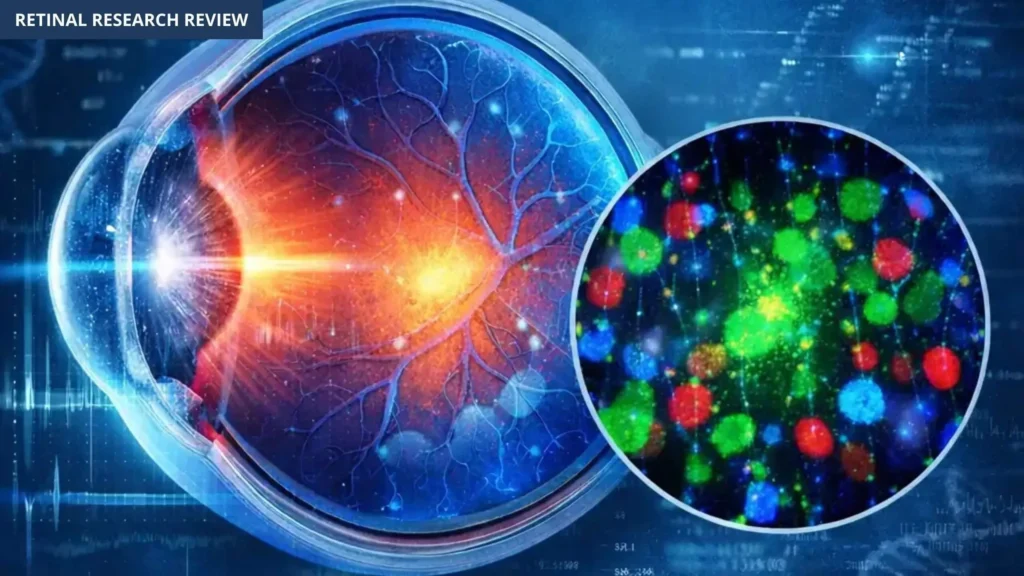
Using advanced fluorescence imaging, researchers were able to observe retinal activity at the cellular level.
To better understand the role of the Prox-1 regulatory protein, scientists used super-resolution fluorescence microscopy, a technology capable of visualizing cellular activity inside living tissue.
This imaging method allows researchers to observe how proteins interact with different types of retinal cells.
During these observations, researchers noticed that higher concentrations of Prox-1 appeared to interact with adult stem cells located within retinal tissue.
These stem cells are believed to play a role in supporting natural cellular maintenance processes inside the eye.
However, when Prox-1 levels were elevated, researchers observed signs that these regenerative signals appeared to become less active.
Scientists say this observation may help explain why retinal repair responses sometimes appear to decline as the eye ages.
Researchers say one particular observation made during these imaging studies raised new questions about how retinal tissue responds to age-related stress over time.
To help explain these findings, a short educational presentation was prepared summarizing the imaging data and the biological mechanisms currently being studied.