RETINAL RESEARCH REVIEW
Independent Clinical Observation Brief
For educational research review purposes only.
Diagnosed With Macular Degeneration? Review This Clinical Brief on a Retinal Protein Linked to Repair Suppression
Recent laboratory imaging has identified a retinal-specific regulatory protein that may increase with age and interfere with the eye’s natural repair response.
This overview examines how this mechanism may relate to current macular degeneration treatment discussions.
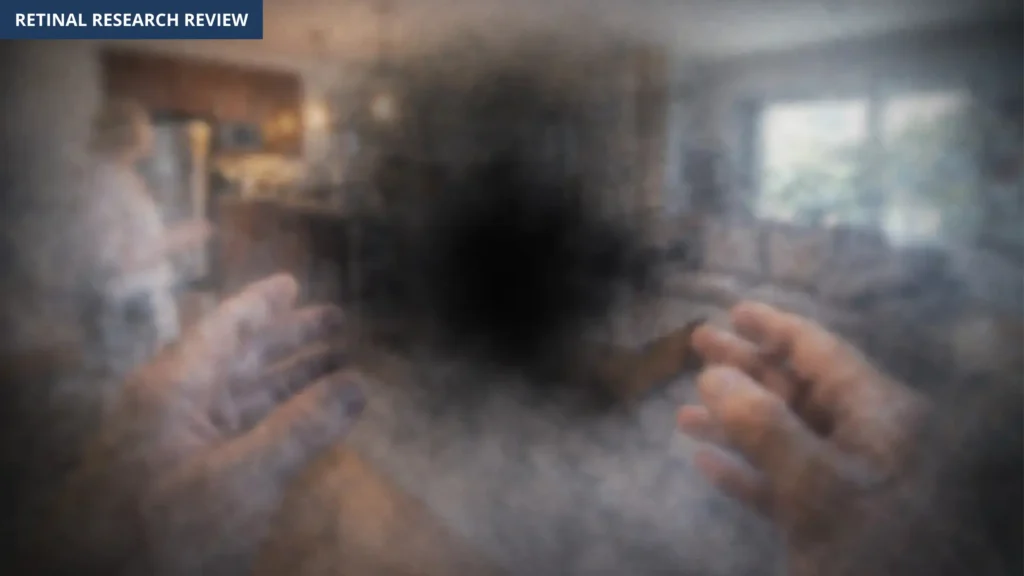
Being diagnosed with macular degeneration often comes with a difficult message:
“Progression can be slowed, but lost central vision cannot be restored.”
For many individuals, this can create a quiet sense that further decline is simply a matter of time.
Conventional treatment typically focuses on:
- Monitoring structural changes
- Managing fluid accumulation
- Attempting to delay deterioration
However, emerging laboratory investigations suggest there may be an upstream biological regulator influencing how efficiently retinal tissue repairs itself over time.
Researchers studying aging eye tissue have identified increasing concentrations of a retinal-exclusive protein known as Prox-1.
Preliminary imaging suggests that elevated Prox-1 levels may correlate with reduced activation of adult stem cells naturally present in retinal tissue.
If validated further, this mechanism may help explain:
- Why vision often declines rapidly after age 50
- Why some individuals deteriorate faster than others
- Why symptom management alone may not address cellular suppression
Using super-resolution fluorescence microscopy — a Nobel Prize-recognized imaging advancement — researchers were able to observe Prox-1 activity...
What they documented:
* Prox-1 accumulation increases progressively with age
*Elevated Prox-1 appears to bind to retinal adult stem cells
* Bound stem cells show significantly reduced regenerative signaling
* Suppressed repair response may accelerate macular stress buildup
Harvard stem cell researchers have published data indicating that regulatory protein activity may rise exponentially after age 50.
Without active adult stem cell response, cumulative exposure to:
- Blue light
- Oxidative stress
- UV radiation
- Normal metabolic waste
may compound structural retinal decline over time.
It is important to note that research in this area is ongoing.
However, this proposed mechanism represents a shift from viewing age-related macular degeneration as purely degenerative — toward understanding it as potentially influenced by cellular suppression dynamics.
A short educational presentation has been prepared summarizing:
• The Prox-1 regulatory protein mechanism
• Age-related protein escalation data
• Laboratory observations on stem cell suppression
• Why conventional symptom-focused strategies may not address protein-mediated inhibition
• What researchers are currently evaluating as potential bioactive modulators of this pathway
Some viewers may find the origin of this research direction unexpected.
The presentation is intended strictly for educational review purposes.
Individuals who reviewed the clinical findings and adopted the discussed supportive protocol have reported subjective changes in visual clarity and contrast perception over time.

Mark T., 63
Florida
“Understanding the cellular mechanism changed how I looked at my diagnosis. Over several weeks, I began noticing gradual improvements in clarity.”

Linda R., 59
Arizona
“The explanation about protein suppression and stem cell activity helped everything make sense. The structured approach felt biologically grounded.”